What Are Blenders and Juicers?
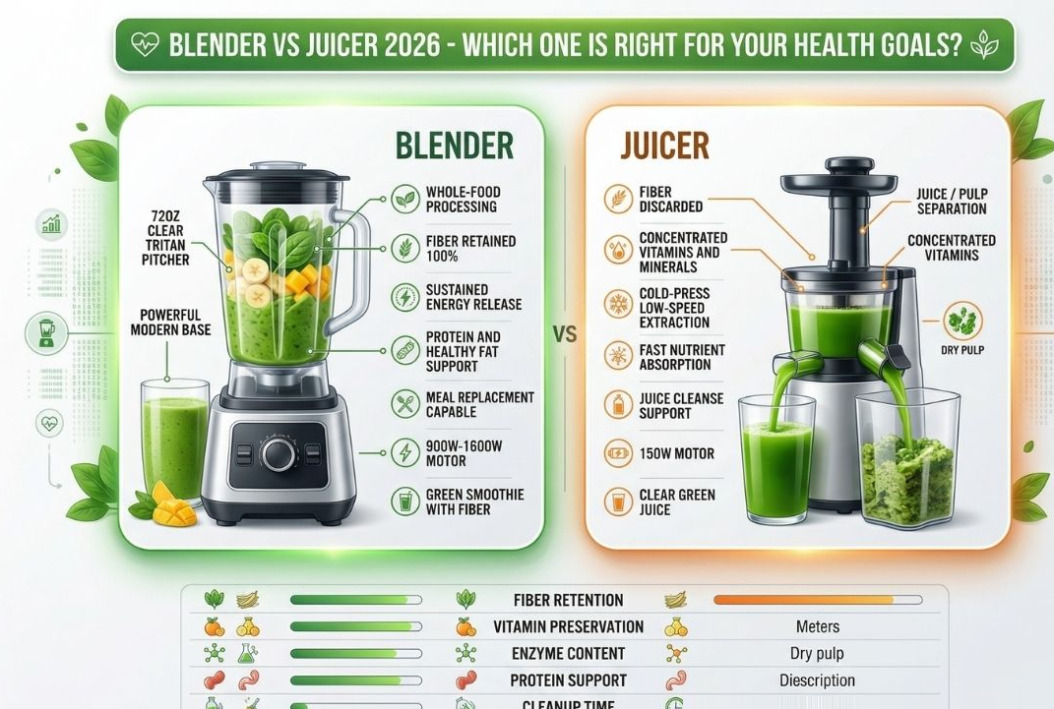
Blenders and juicers take opposite approaches to produce: blenders process whole fruits and vegetables including fiber into a drinkable smoothie, while juicers separate the liquid from the fiber and discard the pulp. The choice between them is a choice between sustained energy from fiber retention and concentrated nutrient delivery from fiber-free juice.
A blender uses high-speed rotating blades to break down entire produce into a smooth liquid, keeping all the fiber in suspension. The fiber acts as a natural thickener and ensures nutrients are released slowly during digestion, which produces steadier blood sugar response compared to juice. The Ninja BN701 at 1400W and the Ninja Foodi SS401 at 1600W both process leafy greens, frozen fruit, protein powder, and nut butter into complete meal replacement smoothies. The Jocuu slow masticating juicer at 150W and the Ninja NeverClog at 150W use an auger that squeezes produce at low speeds to extract juice without generating heat that degrades enzymes.
Blender Design and Whole-Food Processing
Blenders are built around the whole-food philosophy: keep everything, blend everything, drink everything. The high-speed blade assembly breaks down cell walls in fruits and vegetables, which releases nutrients that would otherwise pass through the digestive system undigested. The fiber remains in the final product as a thick, drinkable suspension that provides sustained energy and digestive regularity. A spinach, banana, and mango smoothie in the Ninja BN701 retains the fiber from all three ingredients, which means a single glass delivers the same fiber as eating a full serving of spinach and a banana separately.
Juicer Design and Extraction Technology
Juicers are built around the concentration philosophy: extract maximum nutrients per ounce, discard the fiber for digestive comfort, and deliver concentrated juice. Masticating juicers like the Jocuu at 150W and the Hamilton Beach at 150W operate at low speeds (40 to 80 RPM) to minimize heat and oxidation, which preserves more enzymes and nutrients than high-speed centrifugal extraction. The Ninja NeverClog Cold Press at 150W uses the same slow masticating principle with a larger capacity designed for daily household use.
The Nutrition Philosophy Difference
The core difference is what happens to fiber. Fiber is the structural component of plants that provides sustained energy release, digestive health benefits, and the feeling of fullness that juice cannot match. A 16oz green juice delivers concentrated vitamins but is digested in 20 to 30 minutes because there is no fiber to slow absorption. A 16oz green smoothie delivers the same vitamins plus the fiber from a full serving of leafy greens, which takes 2 to 3 hours to digest and provides sustained energy rather than a blood sugar spike.
Nutrition and Performance
Blenders retain fiber for sustained energy and digestive health. Juicers remove fiber for concentrated nutrients and faster absorption. Neither is universally better for every person — the right choice depends on whether you prioritize sustained energy and fiber intake or maximum vitamin density per serving.
Fiber Retention: Whole Fruit vs Juice
Blenders retain 100 percent of the fiber from every ingredient. A green smoothie made with spinach, cucumber, celery, apple, and ginger in the Ninja BN701 contains the full fiber content of all five ingredients. This fiber provides sustained energy release, supports digestive regularity, and promotes the feeling of fullness that prevents mid-morning snacking.
Juicers remove virtually all fiber during the extraction process. A green juice made with the same five ingredients in the Jocuu slow juicer contains the same vitamins and minerals but none of the fiber. The trade-off is concentration: you can consume more servings of vegetables in juice form than you could eat whole, which helps people who struggle to eat enough vegetables meet their daily intake goals.
Vitamin and Enzyme Preservation
Masticating juicers like the Jocuu at 150W and the Hamilton Beach at 150W preserve more heat-sensitive nutrients than blenders because they operate at low speeds that generate minimal heat. The slow auger compression extracts juice without oxidizing the produce, which means more vitamin C, polyphenols, and live enzymes survive the extraction process.
The Ninja BN701 at 1400W and Ninja Foodi SS401 at 1600W generate significant blade heat during the 30 to 60-second blending cycle, which degrades some heat-sensitive nutrients. However, the primary benefit of blending over juicing is fiber retention, not enzyme preservation. For people with digestive sensitivity who cannot tolerate fiber, a masticating juicer delivers more nutrients in an easily digestible form.
Protein and Fat Content in Drinks
Blenders handle protein and healthy fat sources that juicers cannot process. Adding protein powder, nut butter, avocado, or Greek yogurt to a blender creates a nutritionally complete meal replacement smoothie. The Ninja BN701 with protein powder, banana, and almond butter delivers roughly 25 to 30 grams of protein in a drinkable form. The Jocuu and Hamilton Beach juicers cannot process these ingredients because they are designed exclusively for plant-based produce. A post-workout recovery drink requires a blender.
Best Use Cases for Each Appliance
When a Blender Is the Better Choice
A blender is the better choice for meal replacement, sustained energy, and complete nutrition including protein and healthy fats. The Ninja BN701 at 1400W handles everything from green smoothies with leafy greens and frozen fruit to protein recovery shakes with powder and nut butter. The 72oz pitcher serves family smoothies and the Auto-iQ presets automate texture consistency for busy mornings.
For solo users who prioritize portability and single-serve convenience, the NutriBullet Pro at 900W delivers the cup-to-base design that makes morning protein shakes and green smoothies effortless with minimal cleanup.
For the highest power tier with professional-grade results, the Ninja Foodi Power Blender SS401 at 1600W handles the widest range of ingredients including frozen fruit, fibrous vegetables, and hot soup preparation with smartTORQUE technology that prevents stalling on dense mixtures.
When a Juicer Is the Better Choice
A juicer is the better choice for targeted nutrient replenishment, digestive rest, and maximum vegetable variety in concentrated form. The Jocuu slow masticating juicer at 150W extracts the highest concentration of vitamins and enzymes per ounce from leafy greens, root vegetables, and citrus. The low-speed auger design preserves more heat-sensitive nutrients than high-speed extraction, and the quiet operation makes early-morning juicing less disruptive than a high-speed blender.
For households that want the largest capacity cold-press juicer with pulp control, the Ninja NeverClog Cold Press at 150W with its XL 36oz pulp container handles family juicing sessions without frequent emptying. The NeverClog technology prevents the jamming that frustrates users of cheaper masticating juicers.
Green Smoothie vs Green Juice
A green smoothie in the Ninja BN701 delivers the fiber, protein potential, and sustained energy of a full serving of leafy greens. The fiber is the primary advantage over juice for daily nutrition. A green juice in the Jocuu delivers concentrated vitamins and minerals from multiple servings of vegetables in a light, easily digestible form. The choice depends on whether you are trying to replace a meal or supplement your diet.
Which Should You Buy?
Choose a blender if you want complete nutrition including fiber, protein, and healthy fats in a drinkable meal replacement. Choose a juicer if you want maximum vitamin concentration per serving, are doing a juice cleanse, or have digestive issues that prevent fiber tolerance. The right choice depends on your specific health goals, not on which appliance is objectively superior.
The appliance choice aligns with your health priorities. If your morning routine is a breakfast replacement drink, a blender smoothie keeps you full longer with more complete nutrition. If your routine is a mid-morning energy boost or post-workout recovery, a juice delivers faster nutrient absorption without the digestive bulk.
Time, Cleanup, and Daily Convenience
Blenders win on cleanup speed. The self-cleaning function on the Ninja BN701 and Ninja Foodi SS401 handles most residue in under 60 seconds with warm water and dish soap. Juicers take significantly longer to clean because the auger, strainer, and pulp container all require individual disassembly and rinsing. The Jocuu has more components to clean than the average blender, which adds 5 to 10 minutes of daily maintenance.
Cost and Long-Term Value
Entry-level blenders like the NutriBullet Pro at 900W cover the personal blender tier at an accessible price point. High-performance blenders like the Ninja BN701 at 1400W and Ninja Foodi SS401 at 1600W cost more but last longer due to motor engineering designed for daily heavy use. Masticating juicers like the Jocuu and Hamilton Beach range from entry to mid price tiers, with masticating models commanding a premium over centrifugal juicers for superior nutrient preservation.
Kitchen Space and Storage
Blenders store on the counter or in a cabinet and the pitcher is the only separate component. Juicers require more counter space during use and more storage space between uses due to multiple disassembled components. For small kitchens, a blender takes less space and serves more daily purposes than a dedicated juicer.
Frequently Asked Questions
Does blending destroy nutrients?
Blending causes minor nutrient degradation from blade heat and oxidation during the 30 to 60-second blending cycle, but the impact on most nutrients is negligible. The fiber retention from blending far outweighs the minor heat-related enzyme degradation for general health purposes. Masticating juicers preserve more heat-sensitive nutrients through their low-speed extraction process, but the practical difference for most nutrients is marginal. See our best blender for smoothies guide for blender recommendations.
Is juicing better than blending for health?
Neither is universally better. Juicing delivers concentrated nutrients and faster absorption without fiber bulk, which is beneficial for targeted nutrient replenishment and digestive rest. Blending retains fiber for sustained energy, digestive health, and meal replacement capability. The choice depends on your specific health goals.
Can a blender replace a juicer?
A blender cannot produce juice because it retains fiber, but for most health goals a blender provides more complete nutrition than a juicer. If you are trying to consume more vegetables in drinkable form, a blender smoothie serves the same purpose while retaining the fiber that juicing discards.
Which is better for weight loss?
A blender smoothie is generally better for weight loss because the fiber provides sustained satiety that prevents mid-morning snacking. A juice is digested quickly, produces rapid blood sugar absorption, and leaves you feeling hungry within an hour. Both appliances support weight loss when used as part of a calorie-controlled diet with whole-food ingredients.
Do juicers retain more vitamins than blenders?
Masticating juicers like the Jocuu and Hamilton Beach preserve more heat-sensitive vitamins like vitamin C and live enzymes through their low-speed extraction process. However, the practical difference for most daily nutrients is marginal. Blenders retain fiber that juicers discard, which provides more sustained health benefits than the minor enzyme advantage of cold-press juicing.
Can I make nut butter in a blender?
High-performance blenders at 1200W to 1600W like the Ninja BN701 and Ninja Foodi SS401 can make nut butter from raw almonds, cashews, and peanuts through extended high-speed processing. The process takes 5 to 10 minutes and the friction heat warms the finished butter slightly. Juicers cannot make nut butter. See our best blenders 2026 roundup for models that handle nut butter.
Verdict
Choose a blender if your goal is complete meal replacement with fiber, protein, and sustained energy. The Ninja BN701 at 1400W handles the widest range of ingredients from green smoothies to protein shakes with Auto-iQ texture automation. The NutriBullet Pro at 900W delivers the most accessible entry point into the personal blender category. Choose a juicer if your goal is concentrated nutrient delivery from large quantities of vegetables, juice cleanse support, or digestive rest from fiber-free nutrition. The Jocuu slow masticating juicer at 150W preserves maximum enzymes and vitamins through cold-press extraction. The Ninja NeverClog Cold Press at 150W delivers the largest capacity option for household juicing.
The blender vs juicer decision comes down to honest health goal assessment. For most people, a blender provides more complete daily nutrition. For targeted nutritional supplementation and juice cleanses, a juicer delivers what blenders cannot.
See best blender for smoothies guide
See best blenders 2026 roundup
This article contains Amazon affiliate links. We may earn a commission when you purchase through links on this page, at no extra cost to you. See our affiliate disclosure for more information.